How It Happened - Chronological Record
−4 Years
Leonard Writes the Manuscript
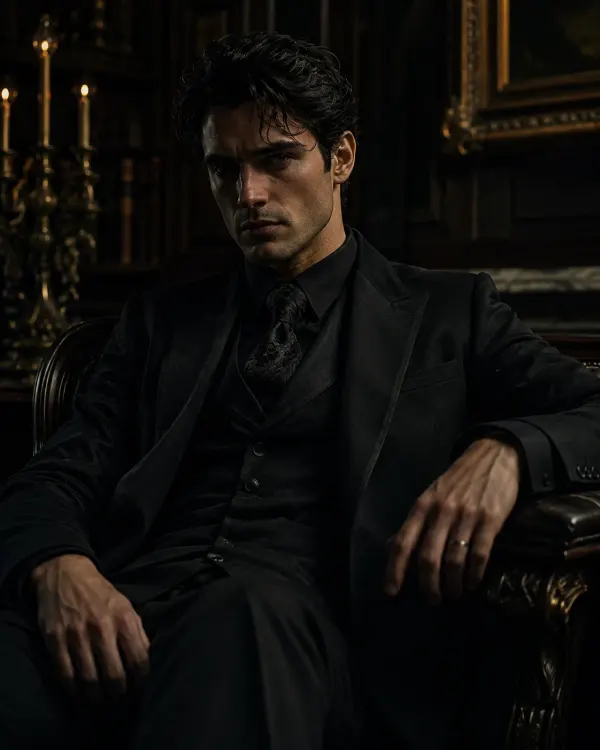
Four months. An apartment before this one. He writes a woman who presses her thumbnail into her palm when she is thinking - a gesture borrowed from someone real. He does not finish it. He does not throw it away. He files it inside a Caravaggio anthology with the unconscious precision of a man who is trying not to think about something.
// 43 pages. No title. No dedication. No author listed.
−3 Years
The Anthology Is Donated
Leonard donates a deceased colleague's library. He doesn't look inside the Caravaggio anthology - The Masters of Shadow: Caravaggio and His Circle, Rome 1887. He has forgotten what's inside it. The anthology enters the archive system. It is assigned status: awaiting restoration. It waits.
// Water-damaged. 43 pages still inside. Neither fact noted.
November
Luna Finds Page 247
The anthology arrives at her studio on a Tuesday. She unwraps it carefully - she has learned that rushing is how you cause the second damage. On page 247, between a footnote on lead white and the next full plate, she finds them. Forty-three handwritten pages, folded twice. She sets down her tools. She reads the first line standing up, gloves still on. By page twelve, she has taken her gloves off.
// Against protocol. She reads them three times. She does not put them back.
November
The Letter
Heavy cream paper. Three drafts. The first too much. The second not enough. The third: "I found something that belongs to you. Or perhaps it doesn't - that's one of the things I'd like to discuss." She signs it with her first name only. She mails it on a Thursday morning. She does not know what she has started.
// He receives it three weeks after donating the anthology.
November
He Doesn't Take Them Back
He knocks three times. Even spacing. They talk for two hours. He does not look at his watch once. She asks why the woman in the manuscript works with damaged things. He says: "Because damage isn't the end of something. It's a different version of the beginning." She asks if that's what he believes, or what the character believes. "Would you like the pages back?" she says. He looks at the anthology. "No," he says. "I don't think I would."
// The pages stay. He leaves without the manuscript. He goes back on Wednesday.
December
The Dedication
A book. Inside: "For the woman who reads the last page first. And stayed anyway." Six words he spent four months writing. He says: "I don't want to leave another book. I want to stay. In the room. Not in a book left in the room. In the room." She presses her thumbnail into her palm. He watches her do it. She says: "Stay." He says: "Yes." He stays.
// The thing is named. The room is real.
Two People Who Restore Damaged Things
The premise is a rhyme, and it is the reason the relationship holds. Luna repairs damaged objects for a living and works on the principle that damage is information rather than ruin. Leonard repairs damaged people on paper, by observing them closely enough to render them, and then declines to show anyone the result.
Both of them treat a broken thing as something to be read. Neither has admitted that this includes each other, and the novel never makes them say it aloud.
The Gloves Are the Whole Story
A conservator handles damaged material in gloves as a professional reflex. By page twelve, Luna has taken hers off.
It is the smallest possible breach and an irreversible one. She has stopped treating the pages as an object and started treating them as a message, and every decision she makes afterwards follows from that. She reads them three times. She does not put them back.
Why He Doesn't Take Them Back
This is the most revealing thing Leonard does. He receives a letter on cream paper signed with a first name only, and he goes to find her. He could retrieve the pages. He knocks three times, they talk for two hours, and he leaves them where they are.
A man whose defining habit is withholding leaves the withheld thing in someone else's hands. It is the closest he can come to speaking, and it is characteristically indirect: not a confession, but a decision not to undo one.
What Book 1 Does to This Story
Read on its own, the manuscript is a romantic accident. Read after The Ghost Who Stayed, it is a pattern.
Leonard did this before. Sophia spent four years being written about by a man who would not say the thing out loud, and she left on a Thursday with a key on the table. The forty-three pages are the same instinct pointed at someone new.
What changes with Luna is the order of events. Sophia had to assemble her understanding from fragments Leonard controlled. Luna starts with the document in her hands, ungloved, before she knows whose it is. The withholding fails before it can begin, and that is why this relationship survives what the previous one did not.
Everything Passes Through an Object
Neither of them says very much. The story is carried instead by things: a water-damaged Caravaggio anthology, forty-three unfinished pages folded twice, a letter written in three drafts, books left on a worktable without a note, and finally a dedication of six words that took four months to write.
That is the grammar of the whole universe. People here do not tell each other things. They write them down and arrange for them to be found, and the reader is the one who gets to watch the arrangement work.
Where to Read It
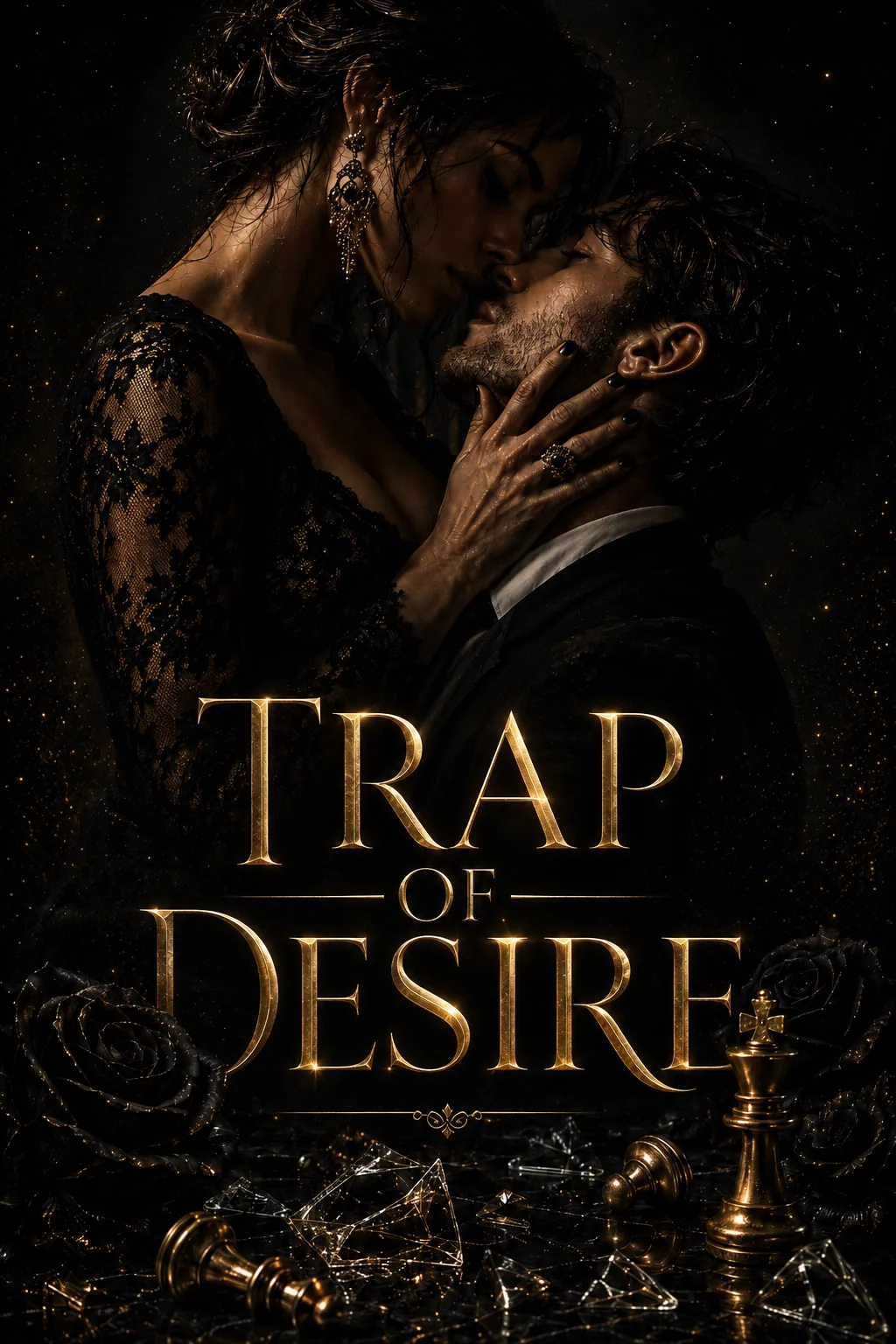
The full story is Book 0, Trap of Desire, ten chapters told through eight points of view and free to read. Their chapters are the first, the second, the fourth and the last; the rest of the cast fills in what neither of them can see.
After that, Book 1 tells you what Leonard was repeating, and the reading order lays out the full path. A twenty-one-book main series and one bonus novel are planned.